
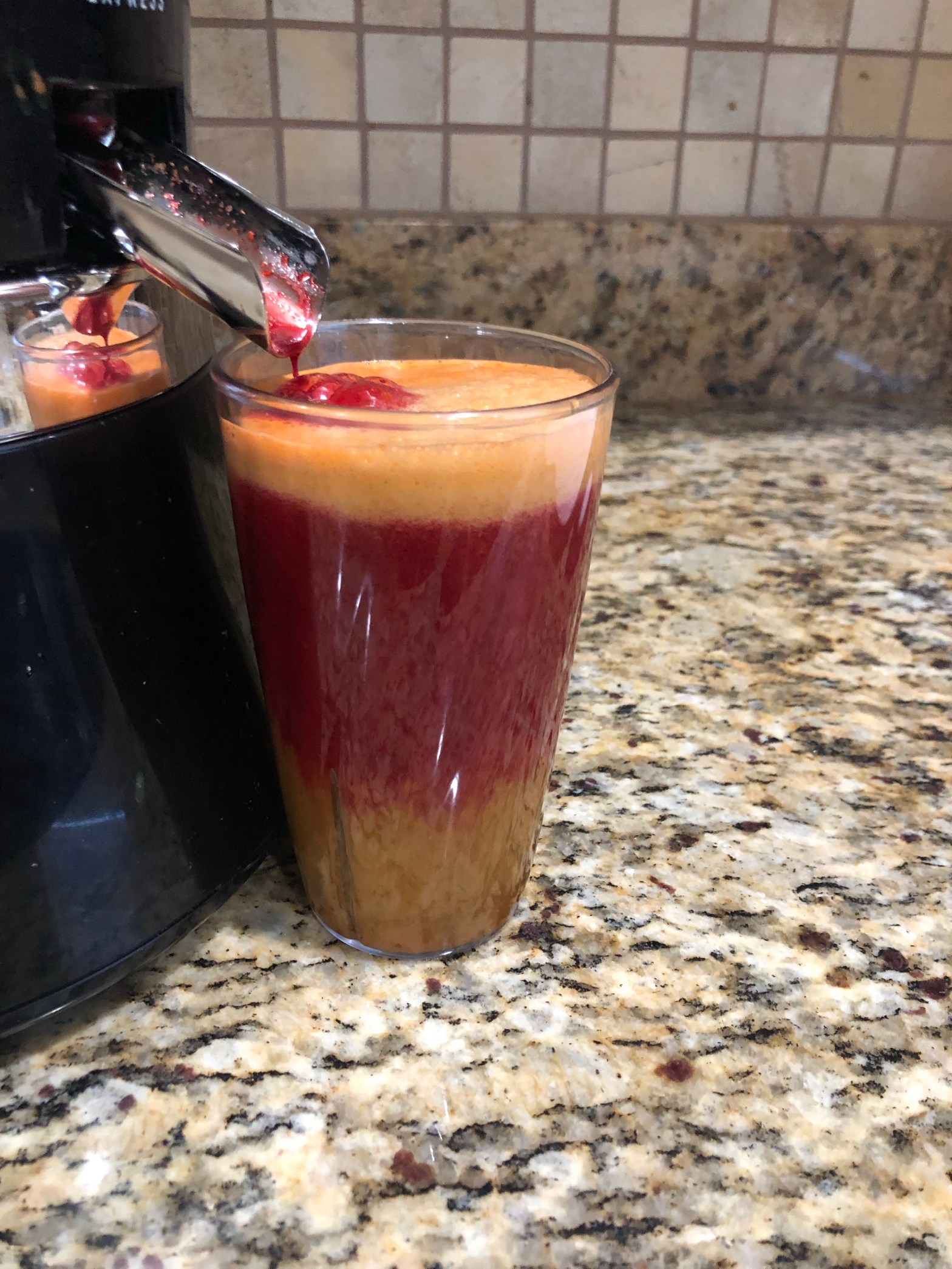
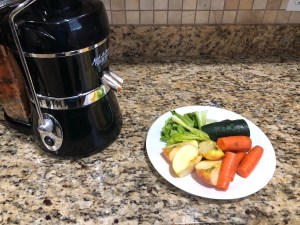
Every day, I make sure Randy eats his:
6 carrots
1 1/2 cucumbers
3 apples
6 stalks of celery
And his beet.
Unless he’d rather have his 1/2 cup of wheatgrass, 1/2 head of green and purple cabbage, 3 tomatoes and 6 oranges, instead.
With an entire brain to re-wire, and a heart muscle to re-grow, Randy needs some serious intake of vitamins, minerals, essential fatty acids, quality plant proteins, and complex carbohydrates. Its a lot to chew. Literally.
Even though Randy is taking all his nutrition, fluids and meds by mouth now, (Hallelujah for sure), it takes an hour to eat each meal, and I keep a close eye on the positioning of his head so there’s no choking or aspiration. We want good, clean, complete swallows with every bite and sip.
No complaints, here. I’d much rather devote a 4th of my day to helping Randy get it all in, than to watch him listlessly hooked up to an IV like we had in ICU, or to have all his life sustaining nutrition dripped through a tube in his abdomen (PEG-percutaneous endoscopic gastrostomy tube) into his stomach like we were doing just over a month ago. I thank the Lord that we have moved onward and upward!
*As a side note, if you ever find yourself in need of tube feeding, check out the label. The choice of fats, proteins and carbs are cheap and disappointing. Canola oil, corn syrup and cheap whey protein were on every label I checked. If Randy and I had found ourselves in a long-term PEG situation, once we headed home, I absolutely would’ve begun concocting my own recipes. Patients this sick NEED higher quality oils like olive, coconut, and avocado, fresh fruits and vegetables like berries, sweet potatoes and greens, and quality proteins such as nuts, lentils and fatty fish. Back when I thought we might not outgrow the feeding tube, I found Functional Formularies, and their whole food plant based meal replacement for feeding tubes. It was created by a family in search of a real food, quality nutrition source for their loved one with a PEG tube. Check it out!*
Ok…back to Randy and his veggies and fruits. He would need to consume a very large quantity of vegetables and fruits to get the therapeutic benefit I’m looking for. I would need him to consume most of them raw or barely blanched, so as to preserve those precious vitamins, enzymes and co-factors. It would take hours, IF he could manage all that chewing, and all that gut-filling fiber.
Enter, the juicer. In my personal opinion, the Champion Juicer is, hands down, the best juicer out there. I’ve juiced many a plant in my mom’s Champion. I don’t have one…yet. I believe I bought the juicer I currently own at a yard sale year ago for $20, and I’m glad I did!
Our new rehab location finally provides me the opportunity to thoughtfully plan and cook all of Randy’s meals, myself. Each evening, I juice enough to supplement each of his 3 meals for the next day, with a variety of veggies in a fruit base.
He sucks it down, like it’s his favorite part of the meal, and I’ve already noticed a significant increase in his energy level and endurance, in the 2 weeks we’ve been here.
Although I don’t buy ALL of my produce organic, I do buy all my juicing produce organic. The sheer quantity that Randy is consuming, warrants that we keep it free from chemical sprays and pesticides. If you’ve ever wondered which foods are important to buy organic, and which foods are a waste of money to buy organic, check out EWG.org
“The clean 15” is a list of produce that have the fewest pesticides sprayed on them (as a general crop), giving you leeway to eat the non-organic sources if your budget requires. “The dirty dozen” are the fruits and veggies known to have the heaviest load of toxins, and would be worth your investment in the organic varieties.
In my next post about juicing, I’ll share some recipes and information about why I’ve chosen these specific veggies and fruits for Randy’s recovery. Until then, we’ve got the beet!
**Visit the sponsorship page to find a simple way to assist our family in our continuing journey to get Randy back home.**
 Follow Randy Home